
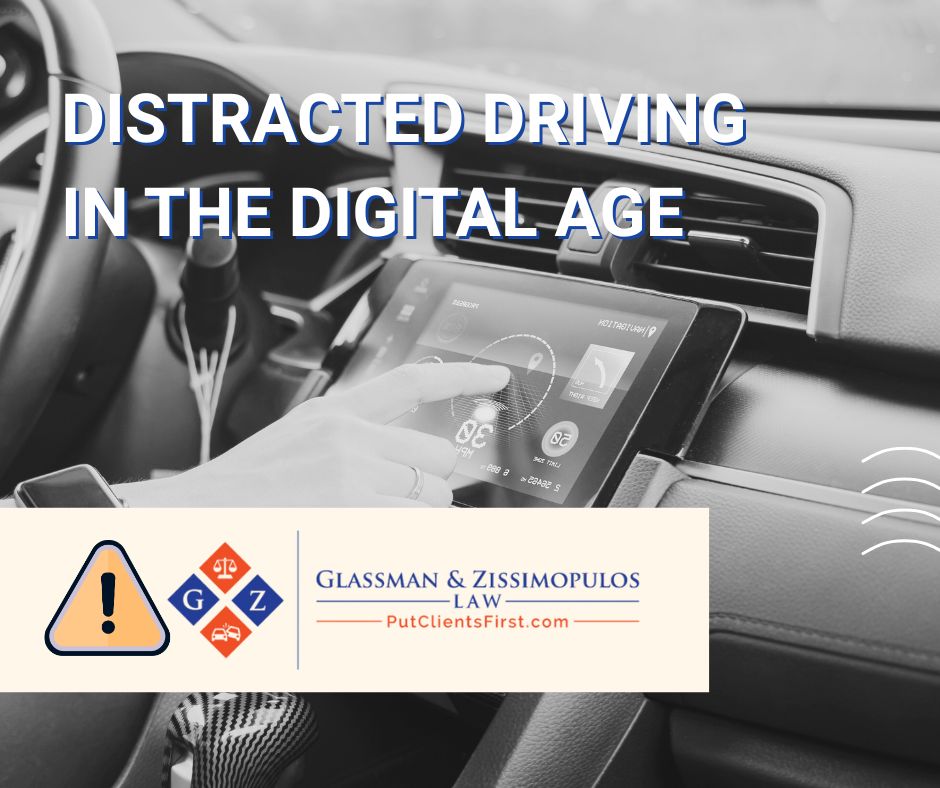
We’ve all seen a driver drifting into another lane, stopping too late at a light, or failing to notice a pedestrian. And more often than not, the culprit isn’t a phone held to their ear, it’s a glowing in-dash screen, flicked between navigation and music apps. As modern vehicles get smarter, safer, and more connected, they also introduce a new kind of risk: digital distraction right from the dashboard.
Let’s explore how in-car screens are changing the distracted driving conversation, what the data shows, and why tech-related negligence is becoming a bigger concern on the road.
Distracted Driving by the Numbers
Distracted driving isn’t a new problem, but it’s evolving fast. According to the National Highway Traffic Safety Administration, distracted driving claimed 3,522 lives in 2021 alone. While cell phone use remains a major contributor, it’s no longer the only digital distraction in town.
In recent years, studies have begun to focus on the role of in-vehicle infotainment systems, those sleek touch screens that control everything from climate settings to GPS navigation. The AAA Foundation for Traffic Safety found that drivers using in-car “infotainment” systems to perform tasks like programming navigation or texting took their eyes off the road for an average of over 40 seconds. That’s more than enough time to cause a serious crash.
To put it in perspective: if you’re driving 55 mph, taking your eyes off the road for just 5 seconds means you’ll travel the length of a football field without looking.
The Rise (and Risks) of In-Car Touch Screens
Modern vehicles often come with large, high-resolution displays mounted on the dashboard. They look like tablets, behave like smartphones, and offer a long list of features: Apple CarPlay, Android Auto, media streaming, real-time traffic updates, and even voice assistants. On paper, it’s all about convenience. But on the road, it’s a different story.
Here’s the issue: touch screens demand visual, manual, and cognitive attention. That’s the trifecta of distracted driving.
- Visual distraction: You have to look at the screen to find what you need.
- Manual distraction: You often have to touch the screen or scroll through menus.
- Cognitive distraction: You need to think about what you’re doing, such as choosing the right playlist, tweaking a setting, etc.
The danger? These tasks are often perceived as quick and harmless. But unlike physical buttons or knobs, touch screens lack tactile feedback. Drivers can’t “feel” their way through controls; they have to look. That means more time with eyes off the road.
And it’s not just younger drivers affected by this. In fact, older drivers may struggle more with navigating complicated menu systems, increasing both distraction time and risk.
Tech-Related Negligence: A Growing Legal Gray Area
Traditionally, distracted driving laws focused on handheld phones: texting, calling, scrolling social media. But with tech now embedded in the car itself, the legal landscape is murkier.
While some states prohibit certain uses of in-car screens (like watching videos while driving), many allow drivers to use built-in systems for navigation and music, even if those systems are just as distracting as a smartphone. That creates a loophole: if the distraction comes from the vehicle itself, is the driver still liable?
Short answer: yes.
Drivers have a legal duty to operate their vehicles safely. That includes not allowing technology, whether it’s a phone, dashboard screen, or smartwatch, to interfere with attention or reaction time. Courts across the country are beginning to recognize this, especially in civil lawsuits involving injury or wrongful death. Plaintiffs’ attorneys are increasingly digging into vehicle data logs and infotainment system records to determine if a driver was distracted at the time of a crash.
In other words, blaming the screen won’t get you off the hook.
Staying Safe in a High-Tech Car
The reality is, most of us aren’t giving up technology. Nor should we have to. But staying safe means using it wisely.
Here are some practical tips to minimize distraction in a modern car:
- Set everything before you go: Program your GPS, select your playlist, and adjust the temperature before you shift into drive.
- Use voice controls: Most infotainment systems offer voice commands. They’re not perfect, but they help reduce manual and visual distraction.
- Limit screen interaction: Treat in-car screens the same way you treat your phone: hands off when the car is moving.
- Enable Do Not Disturb: Both iOS and Android can block notifications while you drive. Use these features religiously.
Pull over if you need to interact with the system: No text, map update, or song change is worth a crash.
Attention Is Still the Best Safety Feature
As vehicles become more tech-heavy, the responsibility to drive attentively becomes even more important. In-car screens may be convenient, but they come with a cost, one that’s measured in crashes, injuries, and lives lost.
So whether your car is a cutting-edge electric marvel or a trusty sedan with a touch screen upgrade, remember this: the road deserves your full attention. No screen, no song, no shortcut is worth risking a life, especially your own.
Stay focused. Stay present. Drive safe.

Call Glassman and Zissimopulos and our team of dedicated attorneys today. (352) 505-4515 or Toll-Free at (844) 787-2543. When you call, you will speak directly with a lawyer. This is our commitment to you.