
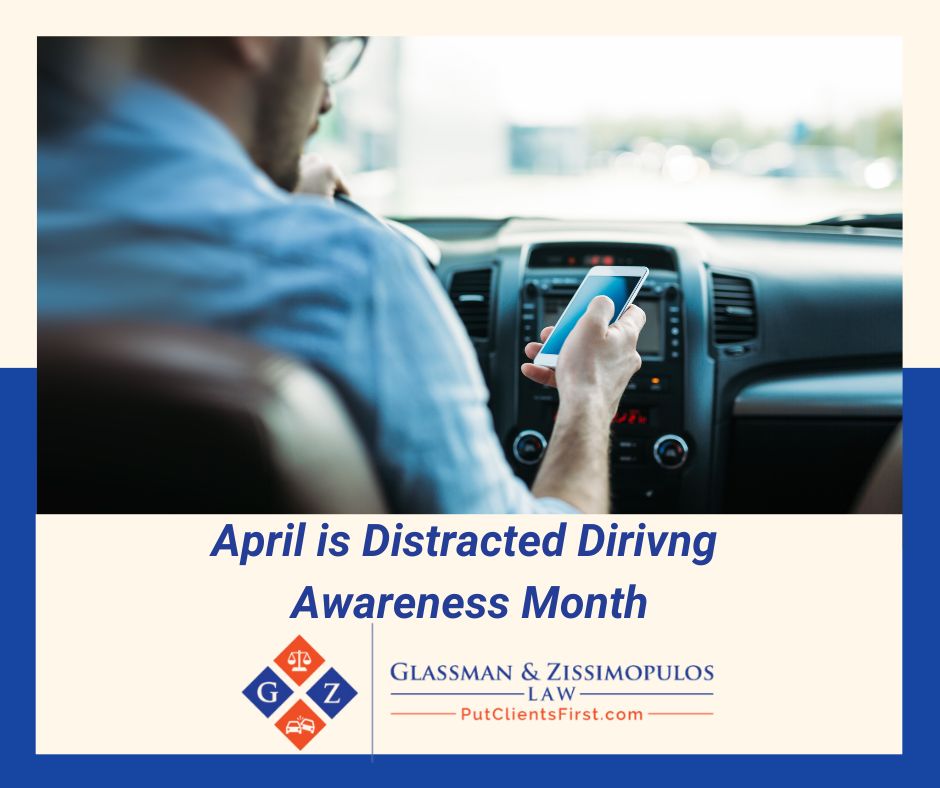
Every April, safety advocates, law enforcement agencies, and attorneys across the country take time to shine a spotlight on one of the most preventable causes of serious accidents on our roads: distracted driving. Here in Gainesville, where University Avenue, Archer Road, and I-75 see heavy traffic every single day, this issue hits close to home.
At Glassman & Zissimopulos, we represent real people whose lives have been turned upside down by a driver who simply wasn’t paying attention. A moment of distraction is all it takes. This month, we want to help our community understand what distracted driving really looks like, how dangerous it is, and what your rights are if someone else’s inattention puts you in harm’s way.
What Counts as a Distraction?
Most people think distracted driving means texting, and texting is absolutely one of the worst offenders. But the reality is that distraction behind the wheel comes in many forms. The National Highway Traffic Safety Administration breaks them down into three categories:
- Visual distractions: taking your eyes off the road (checking your phone, reading a GPS, looking at a roadside accident)
- Manual distractions: taking your hands off the wheel (eating, adjusting the radio, reaching for something in the back seat)
- Cognitive distractions: taking your mind off driving (daydreaming, intense conversations, emotional distress)
Texting is particularly dangerous because it hits all three at once. But so does scrolling through music apps, entering a destination in a GPS while moving, or even having a heated argument with a passenger. Anything that pulls your attention, even briefly, is a distraction.
How Distraction Affects Reaction Time
Here’s a number that should stop you cold: at 55 mph, sending or reading a text takes your eyes off the road for about 5 seconds. In that time, you’ve traveled the length of a football field, completely blind.
Human reaction time in ideal conditions is roughly 1.5 seconds. Distracted drivers often don’t react at all until it’s too late. That delayed response is the difference between a near-miss and a devastating crash. Studies consistently show that texting while driving increases crash risk by as much as 23 times compared to undistracted driving. Even hands-free phone conversations meaningfully slow reaction times compared to simply focusing on the road.
In short, even if a driver’s eyes seem to be forward, their brain may not be on the task of driving.
What Happens Legally After a Distracted Driving Accident in Florida?
Florida is a no-fault insurance state, which means that after an auto accident, your own Personal Injury Protection coverage pays first, regardless of who caused the crash. PIP typically covers 80% of your medical bills and 60% of lost wages, up to your policy’s limit.
However, when injuries are serious, and distracted driving accidents often produce serious injuries, you have the right to step outside of the no-fault system and pursue a claim directly against the at-fault driver.
To do that, your injuries generally need to meet Florida’s “serious injury” threshold, which includes significant and permanent loss of an important bodily function, permanent injury, significant and permanent scarring or disfigurement, or death.
When distracted driving is the cause, that negligence becomes the foundation of your case. Evidence matters enormously here. Phone records can show whether a driver was texting or on a call at the time of impact. Witness statements, dashcam footage, and police reports documenting the driver’s behavior all help paint a clear picture of fault.
How Victims Can Protect Themselves
If you’ve been injured by a distracted driver, the steps you take immediately after the accident can make a significant difference in your case.
- Call 911. Get law enforcement to the scene. A police report documenting the crash is essential.
- Seek medical attention right away, even if you feel okay. Symptoms from whiplash and other injuries often appear hours or days later. Gaps in medical treatment can be used against you later.
- Document everything. Take photos of the vehicles, the scene, road conditions, and any visible injuries. Get contact information from witnesses.
- Avoid giving statements to the other driver’s insurance company before speaking with an attorney. Insurance adjusters are skilled at using your words against you.
- Contact a personal injury attorney as soon as possible. The sooner your legal team can preserve evidence, including the other driver’s phone records, the stronger your case.
The text, the notification, the playlist, none of it is worth a life. If you or someone you love has been hurt by a distracted driver in Gainesville or anywhere in North Central Florida, the team at Glassman & Zissimopulos is here to help.
Call Glassman and Zissimopulos and our team of dedicated attorneys today. (352) 505-4515 or Toll-Free at (844) 787-2543. When you call, you will speak directly with a lawyer. This is our commitment to you.