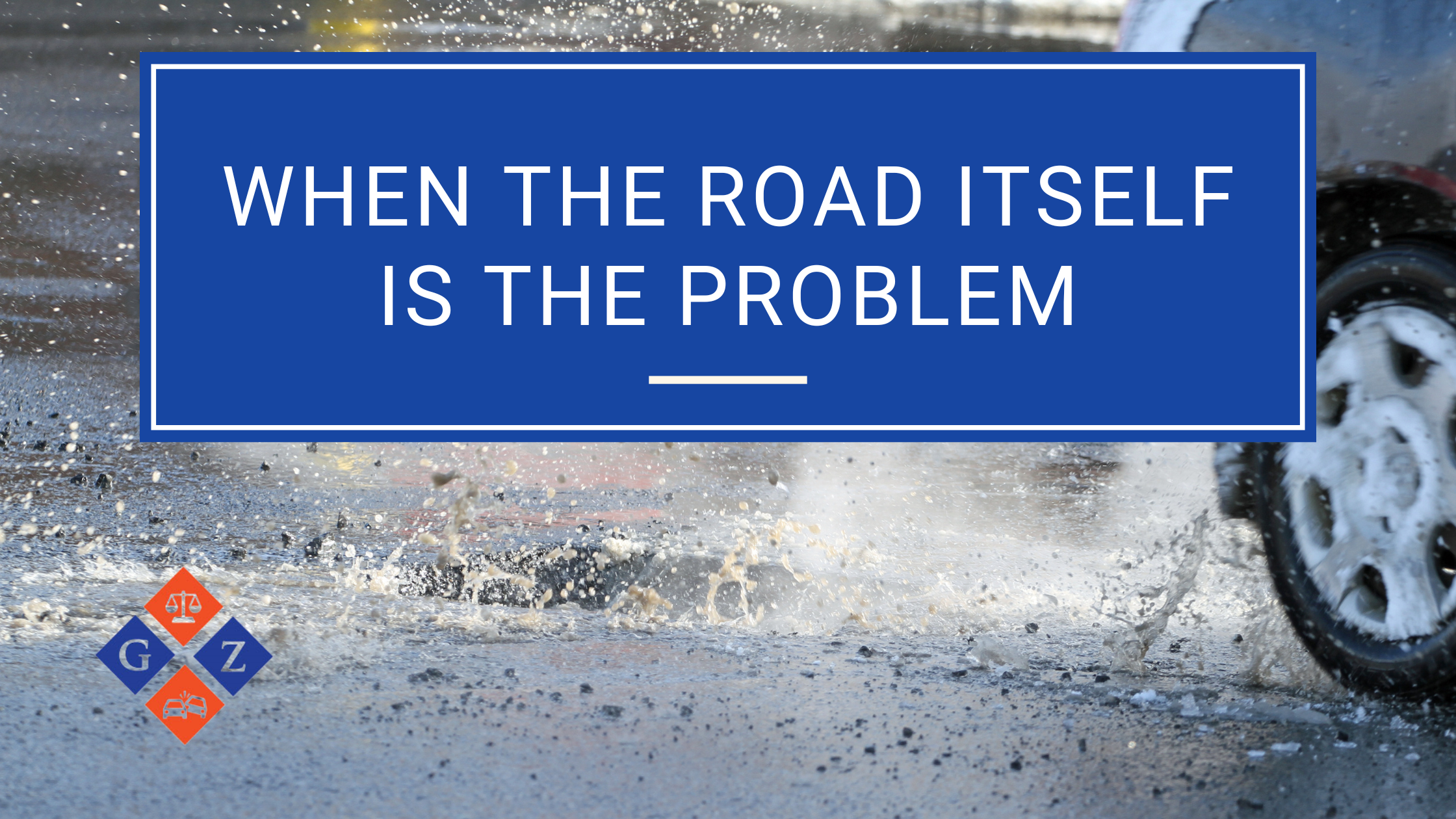
Most people walk away from a car accident assuming another driver is to blame. Sometimes that is true. But there is a category of accidents that happen not because of what a driver did or failed to do, but because of what was waiting for them on the road itself. A pothole that swallowed a tire. A missing stop sign that left an intersection uncontrolled. A construction zone with no warning, no lighting, and no margin for error. A curve that floods every time it rains, with no drainage fix and no advisory speed posted.
When the road causes the crash, the path to accountability looks very different, and most accident victims have no idea where to even begin.
The Roads Are Someone’s Responsibility
Every public road in Florida is owned and maintained by a government entity. State highways fall under the Florida Department of Transportation. County roads are the responsibility of the county government. City streets belong to municipal governments. In construction zones, private contractors hired by those agencies may share responsibility for conditions on the ground.
The point is that roads do not simply exist. They are designed, built, inspected, and maintained by people and organizations with legal obligations to keep them reasonably safe for the public. When they fail to meet those obligations, and someone is hurt as a result, that failure can form the basis of a legitimate legal claim.
Common road conditions that contribute to accidents include potholes and pavement deterioration that cause drivers to lose control, faded or missing lane markings that create confusion in low visibility or at night, missing or damaged traffic signs and signals, inadequate lighting on roads where pedestrian or vehicle traffic is frequent, standing water from poor drainage design, and construction zones that are improperly signed, barricaded, or illuminated. None of these conditions appear overnight. Most develop gradually, get reported, and sit unaddressed. That paper trail of neglect is often exactly what an experienced attorney needs to build a strong case.
Missing and Damaged Signage
- A stop sign knocked down by a previous accident and never replaced.
- A warning sign for a sharp curve that was never installed in the first place.
- A traffic signal that has been malfunctioning for weeks despite multiple complaints to the city.
Signage failures are among the most clear-cut examples of government negligence on the road because the duty is so specific. Traffic control devices exist for a defined purpose, they are governed by federal and state standards, and there are established processes for reporting and repairing them. When a government agency knows or should have known that a sign was missing or broken and failed to act, that inaction has consequences.
These cases often hinge on what the agency knew and when. Public records requests, maintenance logs, prior accident reports at the same location, and 311 or public works complaint records can all reveal whether officials had notice of a dangerous condition long before the crash that hurt you.
Government Liability Claims in Florida: The Rules Are Different
Here is where many accident victims run into serious trouble. Suing a government entity in Florida is not the same as filing a claim against an individual driver or a private company. There are specific rules, specific procedures, and deadlines that are much shorter than most people expect.
Under Florida’s sovereign immunity law, the state and its agencies have limited waiver of immunity for negligence claims. That waiver comes with conditions. Before filing a lawsuit against a government entity in Florida, a claimant must first file a formal written notice of claim with the appropriate agency. That notice must be filed within three years of the date of the accident for most personal injury claims, but the practical reality is that acting sooner gives your case a much stronger foundation.
Municipalities and county governments have their own claims processes as well, and the rules can vary. Some claims require additional notice periods before litigation can begin. Missing a deadline or filing notice with the wrong agency can forfeit your right to recover compensation entirely, regardless of how strong your underlying case might be.
This is not an area where waiting to see how things develop is a reasonable strategy.
Dangerous roads hurt real people every day in Florida, and the agencies responsible for those roads have legal obligations they do not always meet. If you were injured in an accident caused by a road defect, missing signage, or a hazardous construction zone in Gainesville or anywhere in North Central Florida, the clock on your claim is already running.
The attorneys at Glassman & Zissimopulos understand the specific demands of government liability claims and are ready to help you understand your options.
Call Glassman and Zissimopulos and our team of dedicated attorneys today. (352) 505-4515 or Toll-Free at (844) 787-2543. When you call, you will speak directly with a lawyer. This is our commitment to you.